

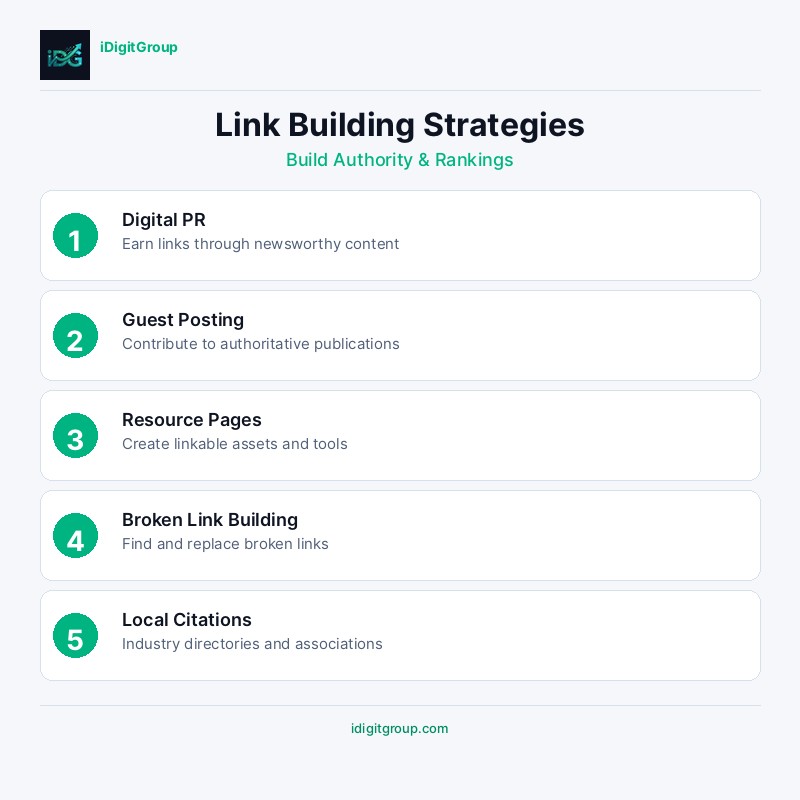
Introduction: Why Links Still Matter in 2026
Effective link building means earning backlinks by creating content genuinely worth referencing and building real relationships within your industry, not manipulating search engines through volume tactics. Despite countless algorithm updates and the rise of AI search, backlinks remain one of the most important ranking signals in SEO: Google's algorithms continue to treat links as votes of confidence, and when authoritative websites link to your content, search engines interpret this as a signal of quality and trustworthiness. Most advice on the subject starts in the wrong place, focusing on tactics (guest posts, HARO pitches, broken link reclamation) without addressing why so many campaigns fail despite technically correct execution. The answer is almost always strategy: chasing the wrong sites, the wrong pages, or the wrong metrics. Effective link building is about earning links through value, not manipulating search engines, and the gap between links that move rankings and links that waste time has never been wider than it is in 2026.
"The objective is not to 'make your links appear natural'; the objective is that your links are natural.": Matt Cutts, Former Google Engineer
This comprehensive guide will show you proven link building strategies that build authority without risking penalties, helping you climb the rankings and establish your brand as an industry leader.
Understanding Link Value: What Makes a Good Backlink?
Not all links are created equal. Understanding what makes a link valuable helps you focus your efforts on opportunities that will actually move the needle.
Link Quality Factors
| Factor | High Value | Low Value | Why It Matters |
|---|---|---|---|
| Relevance | Same industry/topic | Unrelated site | Topical relevance signals expertise |
| Authority | High DA/DR (50+) | Low DA/DR (<20) | Authority passes through links |
| Placement | Within main content | Footer/sidebar | Editorial links carry more weight |
| Anchor Text | Natural, varied | Exact match spam | Over-optimised anchors trigger penalties |
| Traffic | Active, visited site | Dead or abandoned site | Real sites with real visitors |
| Follow Status | Dofollow | Nofollow | Dofollow passes PageRank |
| Uniqueness | First link from domain | Multiple from same domain | First link from a domain is most valuable |
The Link Value Formula
The value of a backlink is determined by several factors working together. Domain authority of the linking site provides the foundation, but relevance is equally important. A link from a niche-relevant website with moderate authority often outperforms a link from a high-authority site in an unrelated industry. Placement also matters: editorial links within the body content of an article carry significantly more weight than footer or sidebar links. The anchor text should be natural and varied, avoiding over-optimisation of exact-match keywords which can trigger algorithmic penalties.
When evaluating link opportunities, consider this formula:
Link Value = (Domain Authority × Relevance × Placement) ÷ Outbound Links
A link from a highly relevant, authoritative page with few outbound links is worth significantly more than a link from a low-authority page with hundreds of outbound links.
Types of Links and Their Value
Understanding the different types of backlinks and their relative value is essential for prioritising your link building efforts. Editorial links, earned naturally through high-quality content, carry the most weight with search engines. Guest post links from relevant industry publications provide both authority and referral traffic. Resource page links, where your content is listed as a helpful resource, signal topical relevance. Digital PR links from news coverage and media mentions build brand authority and trust signals.
Conversely, some link types provide minimal or negative value. Paid links violate Google's guidelines and risk penalties. Comment spam, forum signature links, and low-quality directory submissions offer negligible SEO benefit and can actually harm your profile. Focus your efforts on earning high-quality editorial links through genuine value creation rather than pursuing volume through low-effort tactics.
Advanced Link Building Techniques
Strategy 3: Digital PR and Media Outreach
Digital PR combines traditional public relations with SEO link building to earn high-authority backlinks from news publications and media outlets. Create newsworthy content such as original research, industry surveys, expert commentary on trending topics, and data-driven stories that journalists want to cover. Build relationships with journalists in your industry using platforms like HARO (Help a Reporter Out) and ResponseSource. A single link from a major news publication can be worth more than dozens of links from smaller sites.
Strategy 4: Broken Link Building
Broken link building involves finding broken links on relevant websites and offering your content as a replacement. Use tools like Ahrefs or Check My Links to identify broken outbound links on industry resource pages, competitor mentions, and relevant blog posts. Create or identify content on your site that serves as a suitable replacement, then reach out to the webmaster with a helpful notification about the broken link and a suggestion to link to your resource instead. This technique works because you are providing genuine value to the website owner by helping them fix a poor user experience.
Strategy 5: Strategic Partnerships and Co-Marketing
Build mutually beneficial relationships with complementary businesses in your industry. Co-create content such as joint research reports, webinars, or tools that both parties promote and link to. Sponsor local events, industry conferences, or community initiatives that result in backlinks from event pages and press coverage. These partnerships create natural, contextually relevant links while also building genuine business relationships.
Understanding the different types of links helps you build a natural, diverse link profile:
| Link Type | Description | Value | Difficulty |
|---|---|---|---|
| Editorial Links | Earned through great content | Highest | High |
| Resource Links | From curated lists and guides | High | Medium |
| Guest Post Links | From contributed articles | Medium-High | Medium |
| Directory Links | From relevant business directories | Medium | Low |
| Social Links | From social media profiles | Low (but valuable for discovery) | Low |
| Forum/Comment Links | From community participation | Low | Low |
| Press Links | From news coverage | High | High |
Proven Link Building Strategies
The following strategies represent the most effective and sustainable approaches to building high-quality backlinks in 2026. Each strategy requires a different level of investment in terms of time, resources, and expertise, but all deliver genuine long-term value when executed consistently. The key to success is choosing strategies that align with your business type, industry, and available resources, then executing them systematically over time rather than in sporadic bursts.
Strategy 1: Content-Based Link Building
Content-based link building remains the most sustainable and effective approach. This involves creating genuinely valuable resources that other websites want to reference naturally. The most linkable content types include original research and data studies, comprehensive industry guides, interactive tools and calculators, infographics with unique data, and expert roundup posts. When creating linkable content, focus on filling information gaps in your industry. Analyse what questions your target audience asks that existing content fails to answer adequately, then create the definitive resource on that topic.
Create content that naturally attracts links by providing unique value:
Original Research and Data
Content featuring original data gets linked to because it provides unique, citable information:
- Industry surveys - Survey your customers or industry peers
- Data analysis - Analyse publicly available data in new ways
- Case studies - Document real results with specific numbers
- Benchmarking reports - Compare performance across your industry
Comprehensive Guides
Create the definitive resource on a topic:
- Ultimate guides - Cover every aspect of a topic in depth
- How-to tutorials - Step-by-step instructions with visuals
- Comparison guides - Objective comparisons of tools or services
- Glossaries - Define industry terminology
Visual Content
Visual assets get shared and linked to more than text alone:
- Infographics - Data visualisation that tells a story
- Charts and graphs - Original data visualisation
- Diagrams - Process flows and explanations
- Videos - Tutorials, interviews, and demonstrations
Strategy 2: Outreach-Based Link Building
Outreach-based link building involves proactively reaching out to website owners, journalists, and bloggers to secure backlinks. The key to successful outreach is personalisation and genuine value exchange. Start by identifying websites that have linked to similar content in your niche using tools like Ahrefs or Moz. Craft personalised emails that explain why your content would be valuable to their audience, rather than simply asking for a link. The most effective outreach campaigns achieve response rates of 5-15%, so volume and persistence are important alongside quality.
Proactively earn links through strategic outreach:
Broken Link Building
Find and replace dead links on relevant websites:
- Find resource pages in your industry using searches like "keyword + resources" or "keyword + useful links"
- Check for broken links using tools like Check My Links or Ahrefs
- Create replacement content that matches or exceeds the original
- Reach out to the site owner, offering your content as a replacement
Skyscraper Technique
Improve on existing popular content:
- Find link-worthy content - Content with many backlinks
- Create something better - More comprehensive, updated, better designed
- Reach out to linkers - Contact sites linking to the original
- Offer your improved version - Explain why it's better
HARO (Help A Reporter Out)
Respond to journalist queries to earn press links:
| HARO Tier | Cost | Queries/Day | Response Time |
|---|---|---|---|
| Free | £0 | 3 emails | Standard |
| Standard | £19/month | Same day | Priority |
| Advanced | £49/month | Real-time | Highest priority |
- Respond within 2 hours of receiving the query
- Provide specific, quotable answers
- Include credentials that establish expertise
- Follow up if you don't hear back
Guest Posting
Contribute valuable content to relevant publications:
- Target relevant sites - Same industry or audience
- Pitch unique angles - Not rehashed content
- Provide genuine value - Not thinly veiled promotion
- Include natural links - To relevant resources, not just your homepage
Strategy 3: Relationship-Based Link Building
Build genuine relationships that lead to natural links:
Industry Partnerships
- Co-marketing campaigns - Joint content with complementary businesses
- Expert roundups - Feature industry experts who will share and link
- Podcast appearances - Guest on industry podcasts
- Speaking engagements - Present at conferences and events
Local Link Building
For businesses targeting local markets:
| Source | Example | How to Get |
|---|---|---|
| Chamber of Commerce | Local business directory | Join as member |
| Local news | Coverage of business news | Press releases, newsworthy events |
| Local blogs | City guides, local recommendations | Outreach, sponsorship |
| Universities | Student resources, career pages | Internships, guest lectures |
| Charities | Sponsor pages | Donations, volunteering |
| Industry associations | Member directories | Join relevant associations |
Link Building Metrics to Track
Measuring the effectiveness of your link building efforts requires tracking both quantitative and qualitative metrics. Domain Rating (DR) or Domain Authority (DA) of linking sites indicates the authority being passed to your website. The number of referring domains (unique websites linking to you) is more important than total backlink count, as one link from 100 different websites is far more valuable than 100 links from a single site. Track your link velocity (the rate at which you acquire new links) to ensure consistent growth. Monitor anchor text distribution to maintain a natural profile and avoid over-optimisation penalties.
Monitor these metrics to measure your link building success:
| Metric | Tool | Target |
|---|---|---|
| Domain Rating (DR) | Ahrefs | Steady increase |
| Domain Authority (DA) | Moz | Steady increase |
| Referring Domains | Ahrefs/SEMrush | +10-20/month |
| Link Velocity | Ahrefs | Consistent growth |
| Anchor Text Distribution | Ahrefs | Natural, varied |
| Traffic from Referrals | Google Analytics | Growing |
Common Link Building Mistakes to Avoid
Even experienced SEO professionals make link building mistakes that can waste resources or, worse, trigger search engine penalties. Understanding these common pitfalls helps you build a sustainable strategy that delivers long-term results without risking your website's search visibility.
1. Buying Links
Paid links violate Google's guidelines and can result in manual penalties. The risk far outweighs any short-term benefit.2. Over-Optimised Anchor Text
Using exact-match anchor text for every link looks unnatural. Aim for a natural distribution:- Branded: 40-50%
- Naked URL: 20-30%
- Generic: 15-20%
- Partial match: 5-10%
- Exact match: 1-5%
3. Ignoring Relevance
Links from unrelated sites provide little value and can even harm your rankings. Focus on topically relevant opportunities.4. Quantity Over Quality
One link from an authoritative, relevant site is worth more than 100 links from low-quality directories.5. Neglecting Internal Links
Internal linking distributes PageRank throughout your site. Don't focus solely on external links.Building a Sustainable Link Building Strategy
A sustainable link building strategy is one that generates consistent results over time without relying on tactics that risk penalties. The foundation is creating genuinely valuable content that naturally attracts links, supplemented by strategic outreach and relationship building. Allocate your link building budget across multiple strategies to diversify your backlink profile and reduce dependency on any single approach. Set realistic monthly targets based on your industry's competitiveness and your available resources.
Monthly Link Building Plan
| Week | Activity | Expected Links |
|---|---|---|
| Week 1 | Content creation (linkable asset) | 0 |
| Week 2 | Outreach (broken link, skyscraper) | 2-5 |
| Week 3 | HARO responses, guest post pitches | 1-3 |
| Week 4 | Relationship building, local links | 2-4 |
| Total | 5-12 links/month |
Conclusion: Link Building as a Long-Term Investment
Link building is a marathon, not a sprint. The most successful link building strategies focus on creating genuine value and building real relationships within your industry.
Quality always trumps quantity. A handful of high-quality, relevant links will do more for your rankings than hundreds of low-quality links. Focus on earning links through value, and the rankings will follow.
Need help building your site's authority? Our SEO team specialises in ethical, effective link building strategies that deliver sustainable results. Contact us for a link building audit and custom strategy.
---
Related Reading
---Related Services
- SEO Strategy & Growth - Comprehensive SEO including link building
- Local SEO - Local link building and citations
- Content Marketing - Creating link-worthy content