
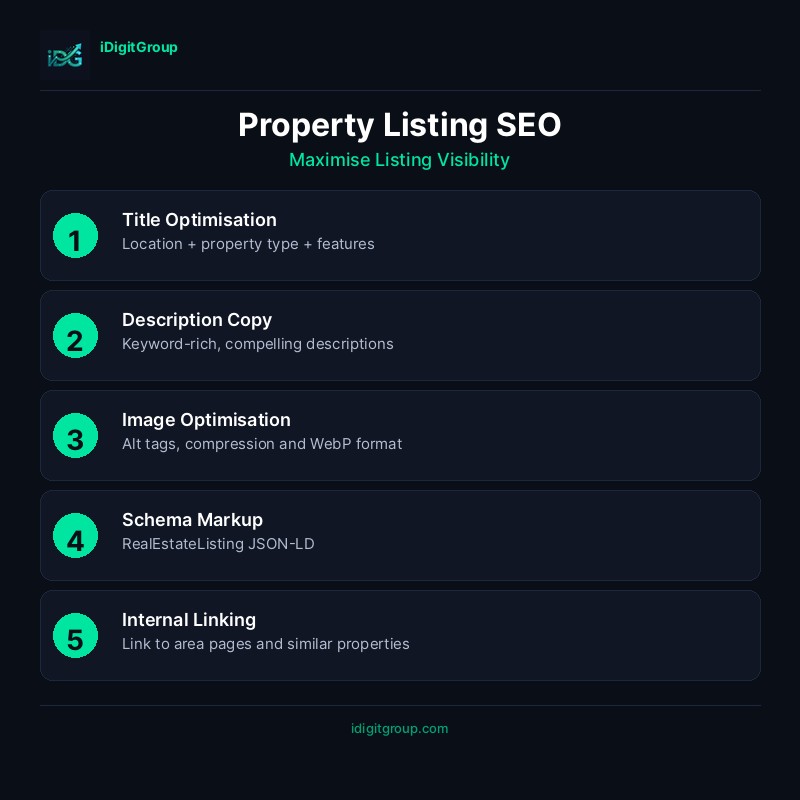
Introduction: Why Optimise Property Listings
Property listing SEO means optimising the title, description, images, and schema markup of an individual listing so it ranks in Google search, Google Images, and Maps rather than being visible only on portals: and it is one of the most undervalued competitive advantages in the UK property market. With over 80% of property searches now beginning online, estate agents who optimise individual listings for search engines gain a significant edge, since well-optimised listings rank higher in Google, surface in rich snippets and image results, and drive qualified traffic directly to the property. Every property listing is an SEO opportunity in its own right, capable of ranking for specific long-tail keywords describing the property, location, and features. Listings with optimised descriptions receive 40% more views, which translates directly into more enquiries per listing without any extra marketing spend. Listing work sits inside the wider programme of estate agent SEO we run for property businesses.
SEO Elements of Property Listings
Listing Title
The property listing title is the single most important on-page SEO element. It should include the property type, number of bedrooms, key features, and location. For example, "Stunning 3-Bedroom Victorian Terrace with Garden in Clapham" is far more effective than "3 Bed House for Sale". Include the most important keywords at the beginning of the title, as search engines give more weight to early-appearing terms. Keep titles under 70 characters to ensure they display fully in search results. Avoid generic descriptions and instead highlight unique selling points that differentiate the property from similar listings in the area.
| Element | Best Practice | Example |
|---|---|---|
| Property Type | First element | "Detached House" |
| Key Feature | Differentiator | "with Garden" |
| Area | Specific location | "Hampstead" |
| Format | Max 60 characters | "Detached House with Garden Hampstead" |
Optimised Description
Property descriptions should be at least 300 words and written in a natural, engaging style that incorporates relevant keywords without keyword stuffing. Start with a compelling opening paragraph that summarises the property's key selling points and location. Follow with detailed room-by-room descriptions that help potential buyers visualise the space. Include practical information such as council tax band, EPC rating, tenure, and nearby amenities. Use structured formatting with clear paragraphs and bullet points for key features to improve readability and scannability.
| Section | Content | Length |
|---|---|---|
| Opening | Hook + key features | 50 words |
| Details | Rooms, size, finishes | 100 words |
| Area | Amenities, transport, lifestyle | 80 words |
| CTA | Call to action | 20 words |
Schema Markup for Listings
| Schema Property | Value |
|---|---|
| @type | RealEstateListing |
| name | Listing title |
| description | Full description |
| price | Asking price |
| address | Structured address |
| numberOfRooms | Bedroom count |
| floorSize | Square footage |
Image Optimisation
| Element | Optimisation |
|---|---|
| File Name | hampstead-house-living-room.jpg |
| Alt Text | "Bright living room detached house Hampstead" |
| Size | Max 200KB, WebP preferred |
| Order | Best photos first |
Advanced Property Listing SEO Techniques
Virtual Tours and Interactive Content
Virtual tours and 360-degree photography provide a significant SEO advantage for property listings. They increase time on page by an average of 5-10 minutes, which sends strong engagement signals to search engines. Implement virtual tours using schema markup to enable rich results in search. Each virtual tour should have its own descriptive title and meta description targeting searches like "virtual tour [property type] [location]".
Location-Based Content Within Listings
Enhance each property listing with location-specific content that helps buyers understand the neighbourhood. Include walking distances to key amenities, local school ratings, transport links with journey times to major destinations, and information about nearby parks and leisure facilities. This additional content not only improves SEO by adding relevant keywords but also provides genuine value to potential buyers, increasing the likelihood of enquiries.
Mobile Optimisation for Property Listings
Over 60% of property searches now occur on mobile devices, making mobile optimisation essential. Ensure property images load quickly on mobile connections, listing pages are fully responsive, and contact forms are easy to complete on smaller screens. Implement click-to-call functionality for phone numbers and ensure map embeds are interactive on mobile. Google's mobile-first indexing means your mobile experience directly impacts your search rankings.
FAQ: Property Listing Optimisation
Should each listing have a unique URL?
Yes, every property should have a permanent, descriptive URL. Avoid URLs with only numeric IDs.
How do I handle expired listings?
301 redirect to category pages or remove with 410 Gone. Don't leave 404 errors.
Conclusion
SEO optimisation of property listings is a competitive advantage. Effective titles, unique descriptions, and schema markup increase visibility and conversions.
Related Resources
- Estate Agent SEO Guide - Complete guide
- Technical SEO - Technical optimisation
---
Related Reading
Related Services
- Real Estate SEO - Property listing optimisation
- Technical SEO - Technical improvements
- Web Design - Property website design