

What is E-E-A-T and Why Does It Matter?
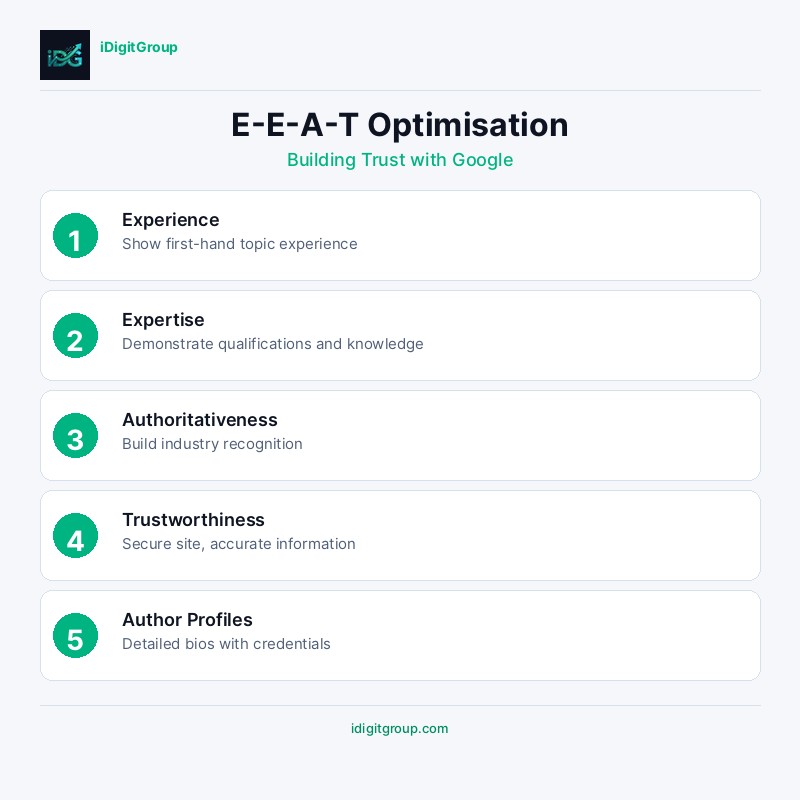
E-E-A-T stands for Experience, Expertise, Authoritativeness, and Trustworthiness: the framework Google's quality raters and ranking systems use to judge whether content is helpful and reliable enough to rank well, particularly for "Your Money or Your Life" (YMYL) topics like health, finance, and legal advice where inaccurate information could cause real harm. It isn't a single ranking factor you can tick off; it's a set of concrete signals (clear author bylines, demonstrable credentials, firsthand experience with the subject, and transparent, accurate content) that Google's systems actively look for when deciding which pages deserve to outrank the competition. A healthcare client of ours illustrates the point well: their content was meticulously researched, longer than competitors', and technically well-optimised, yet Google kept ranking shallower articles above them. The diagnosis took about ten minutes, the site had no clear signal of who wrote the content, no evidence the authors had clinical credentials, and nothing indicating the organisation behind the site was legitimate. That's an E-E-A-T problem, and it's more common than most SEO audits reveal.
"Google's core ranking systems are designed to reward content that is helpful and reliable. E-E-A-T is a key part of how we do that." - Google Search Central
Understanding and optimizing for E-E-A-T is no longer optional; it's essential for long-term SEO success. This is especially true for "Your Money or Your Life" (YMYL) topics, subjects like finance, health, and legal advice, where inaccurate information could have serious consequences.
This guide will break down each component of E-E-A-T and provide actionable strategies to improve your website's signals, build trust with users and Google, and ultimately, improve your rankings.
The Four Pillars of E-E-A-T
Let's dissect each component of the E-E-A-T framework.
| Pillar | Description | Why It Matters |
|---|---|---|
| Experience | The firsthand, real-world experience of the content creator. | Demonstrates authenticity and a practical understanding of the topic. |
| Expertise | The depth of knowledge and skill in a particular field. | Shows that the content is created by someone who knows the subject inside and out. |
| Authoritativeness | The reputation of the creator, the content, and the website. | Signals that you are a go-to source of information in your industry. |
| Trustworthiness | The accuracy, transparency, and security of the content and website. | The most important pillar, as it encompasses all others and builds user confidence. |
1. Experience: Show, Don't Just Tell
The newest addition to the framework, 'Experience', was added to emphasize the importance of content created by someone with direct, firsthand involvement in the topic. Google wants to see that you've actually done what you're writing about.
How to Demonstrate Experience:
* Author Bios: Create detailed author pages and bios that highlight relevant experience, qualifications, and personal stories. * Case Studies: Showcase real-world examples of your work and the results you've achieved for clients. * Behind-the-Scenes Content: Share your process, your team's journey, or how you developed a product or service. * Use of "I" and "We": Don't be afraid to write from a first-person perspective to share personal anecdotes and insights.
For example, a marketing agency in London could share a case study on how they helped a local business increase its online visibility.
2. Expertise: Prove You Know Your Stuff
Expertise is about demonstrating a high level of knowledge and skill in your field. It’s the foundation of creating high-quality, accurate, and comprehensive content.
How to Demonstrate Expertise:
* Comprehensive Content: Go beyond surface-level explanations. Cover topics in-depth, answer common questions, and provide detailed tutorials. Our SEO strategy guide is a great example of this. * Author Credentials: Highlight the author's qualifications, education, and professional background. * Accurate Information: Ensure all facts, figures, and claims are accurate and supported by evidence. Cite reputable sources where necessary. * Structured Data: Use schema markup (like Person or Organization) to help Google understand who created the content and their expertise.
3. Authoritativeness: Become the Go-To Source
Authoritativeness is about your reputation. When other experts and authoritative websites in your industry recognize and reference you, Google sees you as a leader in your field.
How to Build Authoritativeness:
* Link Building: Earning high-quality backlinks from reputable websites is a powerful signal of authority. Our guide on link building strategies can help you get started. * Brand Mentions: Even unlinked mentions of your brand on other websites contribute to your authority. * Online Reviews: Positive reviews on platforms like Google, Yelp, and industry-specific sites build social proof and authority. * Guest Posting: Writing for other well-respected publications in your niche can boost your profile.
4. Trustworthiness: The Foundation of E-E-A-T
Trust is the most critical component of E-E-A-T. Without it, the other pillars crumble. Trust is about making users feel safe and confident in your content and your brand.
How to Build Trustworthiness:
| Trust Factor | Implementation Strategy |
|---|---|
| Contact Information | Make it easy for users to find your physical address, phone number, and email. |
| About Us Page | Tell your story, introduce your team, and explain your mission and values. |
| Secure Website (HTTPS) | An SSL certificate is non-negotiable for protecting user data and building trust. |
| Clear Policies | Have easily accessible privacy policies, terms of service, and refund policies. |
| Citations and Sources | Back up your claims with links to original sources and research. |
| Professional Website Design | A clean, modern, and error-free website signals professionalism and credibility. |
Practical E-E-A-T Optimization Checklist
Here’s a practical checklist to help you implement E-E-A-T on your website.
Content & On-Page SEO
* [ ] Create detailed author bios for all content creators. * [ ] Include author photos and links to their social media profiles. * [ ] Ensure content is well-researched, accurate, and comprehensive. * [ ] Cite sources and link to authoritative websites. * [ ] Use an on-page SEO checklist to ensure all technical elements are optimized. * [ ] Regularly update and refresh old content to keep it accurate.
Website & Technical SEO
* [ ] Create a detailed "About Us" page. * [ ] Make your contact information easy to find. * [ ] Secure your website with HTTPS. * [ ] Implement relevant schema markup (Organization, Person, Article, etc.). * [ ] Ensure your website has a professional design and is mobile-friendly.
Off-Page SEO & Reputation Management
* [ ] Develop a strategy to earn high-quality backlinks. * [ ] Encourage and respond to online reviews. * [ ] Monitor brand mentions and engage in relevant online conversations. * [ ] Consider creating content marketing funnels to nurture leads and build authority over time.
Conclusion: E-E-A-T is a Long-Term Strategy
Optimizing for E-E-A-T is not a one-time fix; it's an ongoing commitment to quality, transparency, and user trust. By consistently creating content that demonstrates your experience, expertise, authoritativeness, and trustworthiness, you are not just appeasing Google, you are building a stronger, more resilient brand that will attract and retain loyal customers.
Focus on providing genuine value to your audience, and the positive signals that Google looks for will follow. It’s a journey, but one that pays dividends in sustainable, long-term SEO success.
---
Related Services
- SEO Services - Comprehensive SEO strategies to boost your visibility.
- Content Marketing - High-quality content that builds trust and drives conversions.